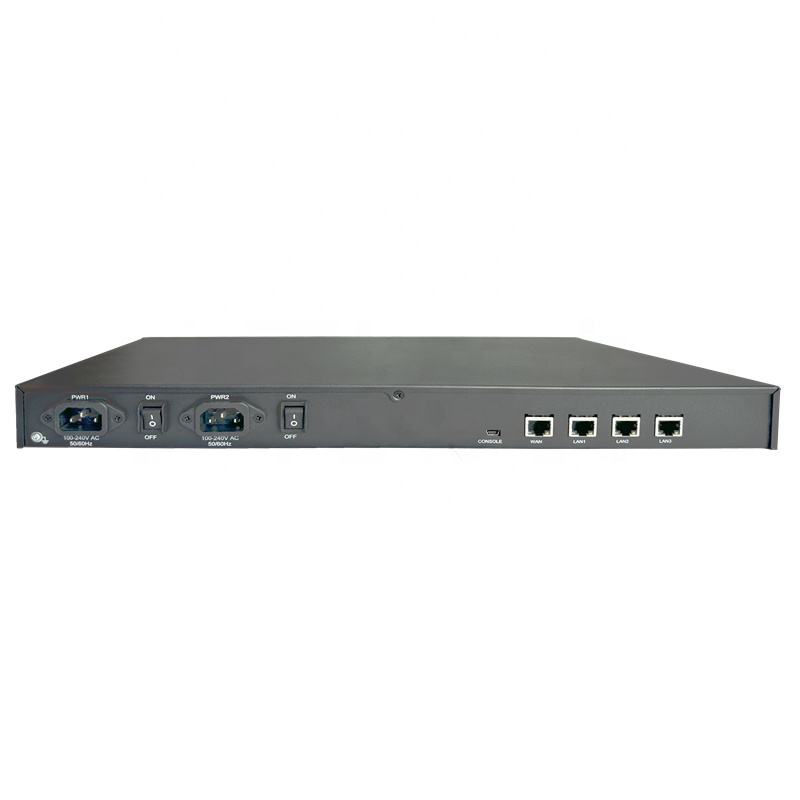
If you need to connect Motorola, Hytera, or ZTE two-way radios to an IP-based dispatch console, the ROIP-4EM Radio Gateway from VIN Telecom does exactly that: it bridges up to four analog or digital mobile radios to a SIP/IP network for bidirectional voice, Push-to-Talk (PTT), and signal control — in a compact 1U rack-mount unit with dual power supplies.
In this guide, we explain what a radio over IP (RoIP) gateway is, how the ROIP-4EM works, its full specifications, which radios it supports, and where organizations around the world deploy it.
What Is a Radio over IP (RoIP) Gateway?
Radio over IP (RoIP) is Voice over IP (VoIP) applied to two-way radio communications, with the addition of Push-to-Talk (PTT) signaling. A RoIP gateway connects a traditional land mobile radio (LMR) system to an IP network, digitizing voice and radio control signals so they can travel over LAN/WAN infrastructure — and letting a dispatcher at a desk talk to field radios exactly as if they were next to the radio itself (Omnitronics, “What Is a RoIP Gateway? The Ultimate Guide”).
The value is simple: RoIP removes distance and hardware limits. Dispatch centers, IP phones, softswitches, and even remote radio sites can share one communications backbone, and legacy radio fleets stay fully usable instead of being replaced (Cubic, “Radio Over IP / Push-To-Talk Over Cellular”).
ROIP-4EM at a Glance: What Makes It Different
The ROIP-4EM is designed as a 4-channel radio gateway: one unit terminates up to four EM (E&M) relay connections over RJ45 interfaces, so a single 1U device can put four mobile or portable radios on the network. Key highlights:
- 4× RJ45 EM relay connections per unit — up to four radios per gateway
- Full RTP codec support: G711A, G711U, G729, G723, AMR, iLBC
- SIP V1.0/2.0 (RFC3261) — interoperates with standard IP-PBX, softswitch, and dispatch platforms
- Dual AC power supplies for mission-critical redundancy
- Four Gigabit Ethernet ports (1 WAN + 3 LAN) for reliable network connectivity
- Web-based configuration and upgrades — manage gateway services, kernel, and firmware from a browser
- Hardware + software watchdog for high reliability in 24/7 operation
- 1U rack-mountable chassis for clean integration into standard server racks
How the ROIP-4EM Works
Each radio connects to the gateway through an EM interface. The gateway reads the radio’s audio (MIC/SPK) and control lines — PTT output and COR (carrier-operated relay) input — and converts them into RTP voice streams plus SIP signaling that travel over your IP network.
On the other side of the network, a dispatch platform, IP phone, or server can then:
- Initiate and receive calls to any connected radio
- Transmit PTT to trigger the radio’s transmitter
- Monitor COR to detect when a radio is transmitting
This creates a true wireless cluster communication + network connectivity solution: field radios, control-room dispatchers, and IP endpoints all operate as one system, regardless of physical location.
ROIP-4EM Technical Specifications
Compatible Radios
The ROIP-4EM works with a wide range of analog and digital mobile and portable radios, including Motorola (MOTO), Hytera, FHF (Fenghuo), Kenwood, ZTE, and Eastcom models:
- Motorola 3688 / GMWN4299A / PMWN4010B
- Hytera MD780, PD780, TD580
- Fenghuo (FHF) FHDM8668
- Kenwood TK-8360
- ZTE PM790
- Eastcom D5235
- Android VR6810
- Haige Hengtong AP-500
Because the interface is standard EM relay-based, other models with similar audio/PTT/COR wiring can typically be integrated as well — contact our engineers to confirm your specific radio model.
Where the ROIP-4EM Is Deployed Around the World
The gateway is built for any organization that already owns a radio fleet and wants IP dispatch without replacing hardware:
- Public safety & security — connect police/fire/security portable radios to a control-room dispatch console
- Transportation & logistics — fleet dispatchers talk to drivers on mobile radios from a central office, city to city
- Mining, oil & gas — remote-site radios linked back to headquarters over private IP networks
- Utilities & field service — maintenance crews reachable from the operations center
- Campus, port & enterprise — security and operations teams on one PTT network with IP phones
In every scenario, the benefit is the same: one IP backbone, full radio coverage, no radio replacement.
ROIP-4EM FAQ
Q1. What does ROIP stand for? Radio over IP — transmitting two-way radio voice and PTT control signals over an IP network, like VoIP for radios.
Q2. How many radios can one ROIP-4EM support? Up to 4 radios per unit, via 4 RJ45 EM relay connections. Multiple units can be deployed to scale to more channels.
Q3. Does the ROIP-4EM support digital radios like DMR? It connects to both analog and digital radios from brands such as Motorola, Hytera, FHF, ZTE, and Kenwood — the radio’s audio and PTT/COR are bridged through the EM interface.
Q4. Which protocols does it use? SIP V1.0/V2.0 (RFC3261) for signaling and RTP with G711A, G711U, G729, G723, AMR, or iLBC for voice.
Q5. Can I configure it myself? Yes — configuration and firmware/software upgrades are done through a built-in web interface; no special tools required.
Q6. What is the EM interface? The EM (E&M) relay interface carries the radio’s audio (MIC/SPK), PTT, and COR signal to the gateway, allowing remote PTT control and call supervision over IP.
Ready to Bring Your Radios onto IP?
The ROIP-4EM Radio Gateway is a proven, cost-effective way to modernize radio dispatch: 4 channels per 1U unit, SIP interoperability, dual power redundancy, and support for the radio brands you already own. It’s manufactured by VIN Telecom (Shenzhen Vintelecom Technology Co., Ltd.), a telecom terminal equipment manufacturer founded in 2009, with R&D, production, and export experience across global markets.
Contact our team for a quote, a compatibility check for your radio model, or a free consultation on your dispatch network design.