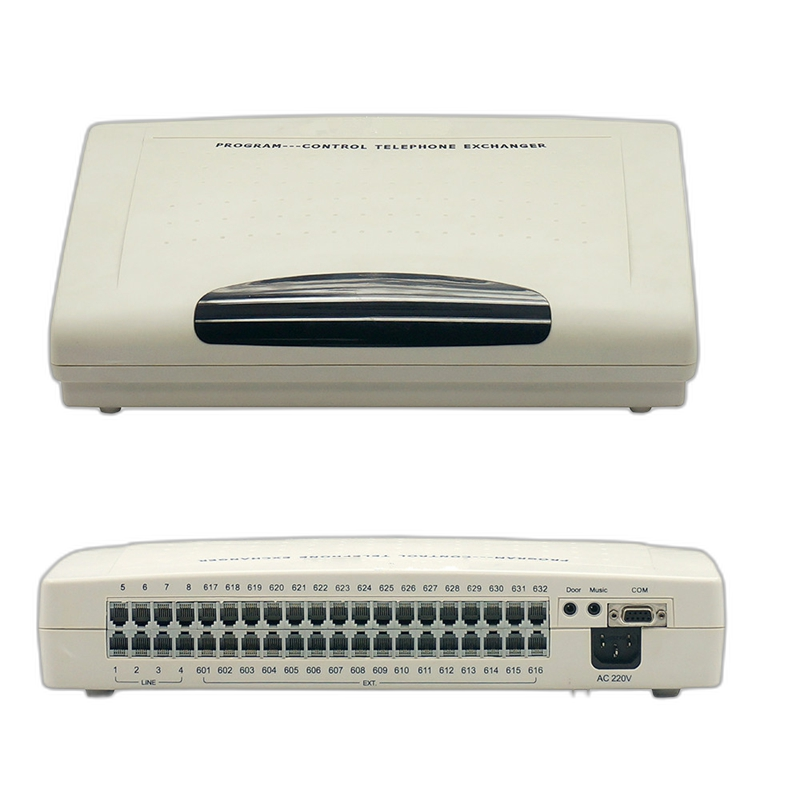
A hotel, B&B or guesthouse with fewer than 30 rooms does not need an enterprise phone system. As a practical rule of thumb you will need 2-4 outside lines (CO lines) and one extension per room plus a few for reception, kitchen and back office – which means a compact, expandable PABX is usually the right answer, not a large switchboard and not a monthly cloud subscription. The trick is choosing a system with the right features for guests, not the longest specification sheet. This guide shows you how to size it, what to insist on, and what to avoid.
How Many Lines and Extensions Does a Small Hotel Really Need?
Two numbers are often confused: outside lines (the lines you rent from the telephone company, shared by the whole hotel) and extensions (the individual phones in rooms and offices).
How to sanity-check the line count: estimate how many calls happen at your busiest hour, then add one line of headroom. Most small hotels never need more than four outside lines, even at full occupancy – the real constraint is usually the number of extensions, not the trunk lines. For a more detailed method, see our guide to how many phone lines a small business needs.
Which Features Actually Matter in a Hotel PBX?
Ignore feature lists copied from enterprise systems. For a hotel under 30 rooms, these are the ones that change your daily operation:
- Auto-attendant with recordable greeting (OGM) – callers hear a professional greeting and reach reception without a dedicated operator around the clock.
- Call transfer and call pickup – reception can move a call to a room, the restaurant or the manager, and pick up a ringing line from another desk.
- Call restriction and call duration control – prevent unauthorised international or premium calls from guest rooms and control how long calls can run.
- Call billing records (via PC software) – useful when you need to review or charge for calls; look for systems with built-in call accounting or PC management software.
- Door phone and door opener support – one system can cover the entrance intercom as well as room phones.
- Power failure transfer – if the power goes out, at least the reception line keeps working (explained in our power failure transfer guide).
- Expansion capacity – a card-based system lets you add extensions when you renovate or extend, instead of replacing the whole PBX.
TP96 Series: An Expandable Choice for Small Hotels
The TP96 Series is a metal-case group telephone PBX launched in 2020 and designed for cabinet installation – a good fit for hotels, buildings, schools, hospitals and similar premises.
Its modular design is what makes it flexible for a growing hotel:
- 4 CO line ports per CO line card
- 8 extension ports per extension card
- Optional keyphone interface (4 keyphone interfaces per keyphone card)
- Maximum configurations range from TP96-096 (0 CO, 96 extensions) through TP96-880 (8 CO, 80 extensions) to TP96-1664 (16 CO, 64 extensions)
In practice this means you can start with the lines and extensions you need today, then add cards as you add rooms – no need to buy a larger system up front.
When a Compact System Is Enough: the SV Series
For a B&B or guesthouse with fewer than 10 rooms, a smaller system is often the better investment. The SV Series – for example the SV-308 with 3 CO lines, 8 extensions and 7 simultaneous channels – covers the essentials: auto-attendant with recordable OGM, call transfer and forwarding, three-way conference, call pickup, call restriction, plus built-in lightning protection, memory protection and power failure transfer.
For a small property, that is usually everything guests notice and nothing you have to maintain.
What About the Phones in the Rooms?
The PBX is only half of the guest experience. Room phones should be simple, robust and easy to clean. Our corded hotel room telephone is built for exactly this use: straightforward operation for guests, with the durability a hotel environment demands. Wall-mounted models are also available for bathrooms and corridors.
Hotel PBX Buying Checklist
- Count extensions first, lines second – extensions (one per room + shared phones) drive the model choice.
- Choose card-based expandability if you may add rooms within a few years.
- Confirm power failure transfer for at least the reception line.
- Check the auto-attendant can record your own greeting in your hotel’s language.
- Ask about call billing and call restriction – both should be manageable without a technician.
- Verify the phones are standard analog or SIP phones you can buy locally, not proprietary handsets.
- Ask for a test unit or a clear test procedure before you commit to a full installation.
A Note on Growing Past 30 Rooms
If your property is already above 30 rooms, or you plan to expand beyond that, a larger switchboard such as the CP832 with 8 CO lines and 32 extensions is the natural next step, and systems in the same family scale further. The important thing is to choose a platform you can grow into rather than replacing everything after the first renovation.
Get a Configuration for Your Property
As a manufacturer we build systems for properties of every size, so we can size the configuration to your rooms and lines instead of selling you the biggest model. Tell us your room count, your current lines and your reception requirements – email sales@vintelecom.net and we will send a recommended configuration and quote. You can also browse the complete PABX product range to compare capacities.